

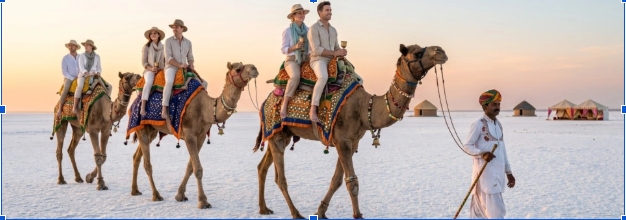

There is a version of Kutch that most visitors experience: the white desert at sunset, the festival grounds, a quick stop at a craft village, and a visit to Aina Mahal. It is a good experience, and there is a reason so many people follow this route. But Kutch is a vast, complex, culturally layered district with an extraordinary amount sitting just beyond what the standard itinerary covers. The packages that reveal this deeper Kutch are the ones built by people who genuinely know the region, and who understand that the most memorable travel experiences almost always happen slightly off the main trail.
Why Straying From the Obvious Route Matters in Kutch
The Great Rann of Kutch covers over 7,500 square kilometres. The district itself is the largest in India. What this means practically is that the stretch of white desert most visitors see, spectacular as it is, represents only a tiny fraction of a landscape that extends for distances genuinely difficult to comprehend from ground level.
Beyond the geography, Kutch is home to over a dozen distinct artisan communities, each with its own craft tradition, visual language, and cultural history. Most Tour Packages touch on one or two of these. The most rewarding ones build itineraries that engage with several of them meaningfully, in their own settings rather than in a festival stall context.
The Communities Worth Seeking Out
The Rabari Herders
The Rabari people are semi-nomadic pastoralists whose distinctive embroidery style, densely worked, using mirrors and bold geometric patterns, is one of the most recognisable craft traditions of Kutch. Their permanent and semi-permanent settlements across the district are among the most visually striking human environments anywhere in Gujarat.
Tour Packages that include a visit to an active Rabari settlement, rather than simply a stall selling Rabari-style goods, offer an experience of extraordinary cultural depth.
The Harijan Artisans of Ajrakhpur
Ajrakh is a block-printing tradition using natural dyes that has been practised in Kutch for centuries. The village of Ajrakhpur, established by master craftsman Ibrahim Khatri after the 2001 earthquake, is home to a community of artisans producing some of the finest ajrakh textiles in the world. A visit here, including a workshop demonstration, is one of the most genuinely educational craft experiences available anywhere in India.
The Khamir Craft Resource Centre
Khamir, based near Bhuj, is an organisation supporting traditional Kutchi artisans with training, market access, and preservation of craft knowledge. A visit to Khamir offers an overview of the full range of Kutchi craft traditions, from copper bell-making to leather work to natural dyeing, in a single, thoughtfully curated setting.
Landscapes Beyond the White Desert
The Rann of Kutch Festival celebrates the white salt desert as its centrepiece, and rightly so. But Kutch’s natural landscapes are considerably more varied than this.
| Landscape | What It Offers |
| The Black Hills (Kala Dungar) | Highest point in Kutch with sweeping views across the Rann; a wild dog feeding ritual at the temple |
| The Banni Grasslands | One of Asia’s largest grasslands, home to pastoral communities and significant bird life |
| Mandvi Beach | A working dhow construction yard alongside a genuinely beautiful stretch of coastline |
| Narayan Sarovar | A sacred lake with ancient temples and migratory bird populations in winter |
Packages that include even one or two of these landscapes alongside the main festival experience give visitors a far more complete picture of what Kutch actually is.
Off-Trail Experiences During the Festival Period
Even within the Rann of Kutch Festival itself, there are experiences that most visitors miss simply because they require a little more effort or local knowledge to find.
The Twilight Hours Before the Main Performances
The period between the afternoon craft market and the evening cultural programme is often the most interesting time at the festival grounds. Performers are warming up, craftspeople are relaxing, and the atmosphere is informal and accessible in a way that it is not during the busier periods.
Conversations With the Dhola Musicians
The Dhola community of musician-storytellers has a tradition that predates the festival by centuries. Finding these performers and spending time listening to their longer, traditional pieces, rather than the shorter, more accessible segments presented in the main programme, is a genuinely moving experience for anyone with patience and curiosity.
What to Ask For When Choosing Tour Packages
Not all Packages are equal in how deeply they engage with the region. When evaluating options, it is worth asking:
- Does the itinerary include at least one artisan village visit beyond the festival grounds?
- Is there a local guide with personal knowledge of the communities visited, not just a general tour operator?
- Does the package include any natural landscapes beyond the main white desert experience?
- Are any unscheduled hours built into the itinerary, or is every moment programmed in advance?
Conclusion
Kutch rewards curiosity more generously than almost any destination in India, and the Packages that honour this by looking beyond the obvious trail are the ones that produce the most genuinely memorable travel experiences. The festival is the perfect starting point for this deeper exploration, a spectacular event that opens a door to a region of extraordinary richness. Rann of Kutch Festival designs itineraries that walk visitors through that door and keep going, revealing the real Kutch that lies just beyond where most visitors stop.